Is your operator O2 Prepared?

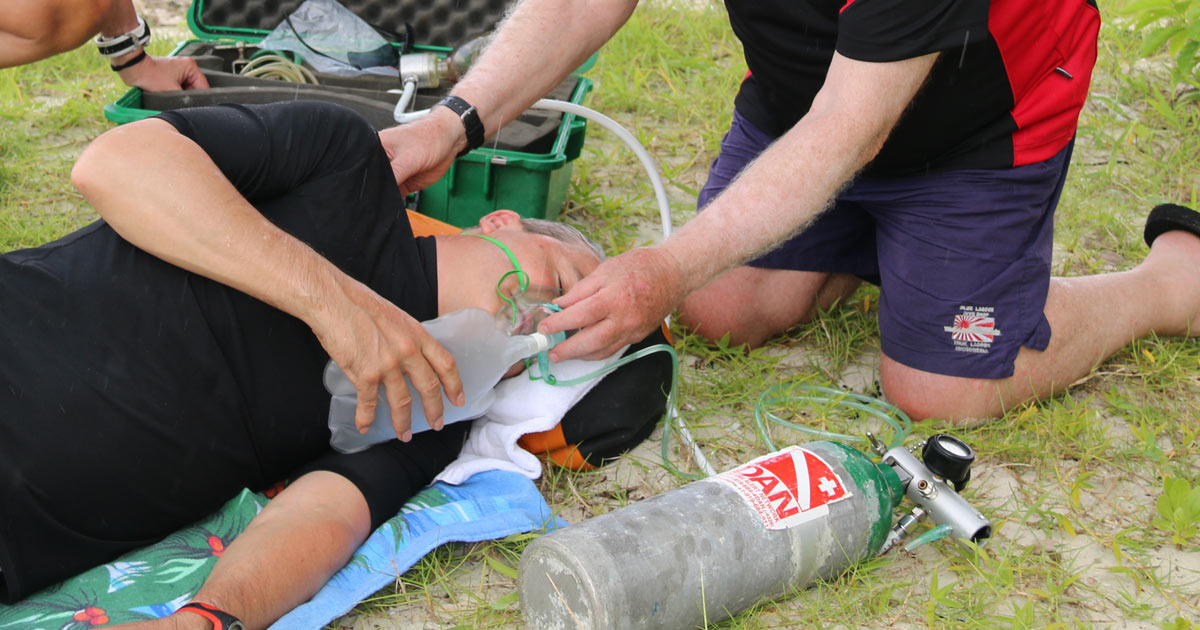
There’s more to Oxygen Preparedness than just having that green case with the reassuring DAN sticker on it tucked away in the bow. Delivery equipment, training and other factors play a big part. How prepared is your dive operator?

Going on a Dive Trip?

Recently on Facebook we posted four questions that divers should ask to gauge an operator’s level of preparedness to help you in the event of a diving accident. These centred around availability of oxygen, appropriate equipment, supply of oxygen and staff trained in oxygen provision.

Here, DAN AP’s General Manager, Scott Jamieson, discusses Oxygen Preparedness in the context of a recent diving incident. Continue reading “Is your operator O2 Prepared?”

Can I dive while pregnant?

A common question from female divers is whether they can keep diving whilst pregnant. Even those trying to become pregnant need to read this blog.

Can I dive while pregnant?

A common question from female divers is whether they can keep diving whilst pregnant.

When it comes to fitness for diving, the recommendations for male and female divers are largely the same: good exercise tolerance, a healthy weight and awareness of possible concerns related to medical conditions and medications. But men and women are physically and physiologically different and with women representing about a third of the recreational diving population it’s important to consider specific health concerns that female divers face. Continue reading “Can I dive while pregnant?”

How you can stay safe wreck diving

Wrecks provide a fascinating window on the past and can be a museum of both human history and aquatic ecology. It’s safe to say that the knowledge, training and expertise needed to dive wrecks safely are as unique as the experience itself. We have précised the most important issues pertaining to safe wreck diving from a previously published article.

This October, the Coolidge will celebrate its 75th Anniversary, so it’s a good time to look at how you can stay safe wreck diving.

Wreck diving is often undertaken in challenging environments, but it can be done safely with the right training, experience and equipment. This is not the environment to be taking shortcuts.

We have précised the most important issues pertaining to safe wreck diving from an article by, Richard Walker (M.D., M.S) and Joe Citelli, previously published in DAN’s Alert Diver magazine. Continue reading “How you can stay safe wreck diving”

Vertigo and diving – not a good mix!

If you feel like you, or the world around you, is tilting, swaying, whirling or spinning – then you’ve got vertigo. If this happens before, during or after diving you need to read this post.

If you have a persistent feeling of tilting, swaying, whirling or spinning motion of oneself or of the surrounding world when nothing is moving, you are experiencing vertigo.

In other words, it’s not a nice feeling whether it happens under the water or on the surface. But why does it happen and is there anything we can do to avoid it, and importantly, what are some strategies for handling it if it occurs underwater? Continue reading “Vertigo and diving – not a good mix!”

What does ‘ appropriate ’ first aid mean for diving injuries?

What does ‘appropriate’ first aid mean for diving injuries? Oxygen first aid can be beneficial for a variety of situations in general first aid but the provision of high concentrations of oxygen is the cornerstone of first aid for decompression illness.

What does ‘appropriate’ first aid mean for diving injuries?

In a recent Facebook post we advised that the development of symptoms of decompression illness (DCI) can be progressive, for example, what starts as tingling in the feet can sometimes develop into weakness or even paralysis in the legs, so it’s important to start ‘appropriate’ first aid quickly rather than ignoring the symptoms.

But what does ‘appropriate’ first aid mean in the context of diving? Oxygen first aid can be beneficial for a variety of situations in general first aid but the provision of high concentrations of oxygen is the cornerstone of first aid for decompression illness. Oxygen provision is also very beneficial in other dive-related injuries or illness such as lung rupture, drowning and carbon monoxide poisoning, among others.   Continue reading “What does ‘ appropriate ’ first aid mean for diving injuries?”

What Can I do to Try to Avoid Getting DCI?

Here are some strategies that divers can use to try to minimise the risks of DCI – Decompression Illness. Some are backed by evidence, others are not (yet) but are generally and reasonably believed likely to reduce the risk.

A recent DAN AP Facebook “Safety Tip” on ascent rates triggered much discussion and warranted further explanation. The Ascent Rates Safety Tip was part of a broader piece concerning: What Can I do to Try to Avoid Getting DCI?

DAN Asia-Pacific Founder, Chairman and Director of Research, John Lippmann, wrote a book “Decompression Illness: A simple guide and practical advice on the recognition, management and prevention of DCI”, that incorporates a wealth of knowledge from his decades of experience and research into DCI.

John has been actively following developments in decompression illness for nearly thirty years, including taking emergency calls for DAN Asia-Pacific 24 hours a day, seven days a week, almost every day for close to 20 years. As a result, he has dealt with many and varied cases of divers with DCI.  Continue reading “What Can I do to Try to Avoid Getting DCI?”

Can you send me a list of chamber locations?

At DAN AP we often get asked by Members if we can provide a list of chamber locations throughout the Asia-Pacific region. Our answer to this question is quite simple: No.

At DAN AP we often get asked by Members if we can provide a list of chamber locations throughout the Asia-Pacific region. Our answer to this question is quite simple: No.

There are several good reasons for this as explained below.  Continue reading “Can you send me a list of chamber locations?”

Sea sickness or motion sickness – how to stop it ruining your dive trip

For those resistant to motion sickness – consider yourself fortunate. For the rest of us, what can we do to stop it happening, safely, so we can keep diving?

Seasickness, or motion sickness, has undoubtedly ruined innumerable diving trips, holidays and activities in general.

For those resistant consider yourself fortunate. For the rest of us, what can we do to stop it happening, safely, so we can keep diving? Continue reading “Sea sickness or motion sickness – how to stop it ruining your dive trip”

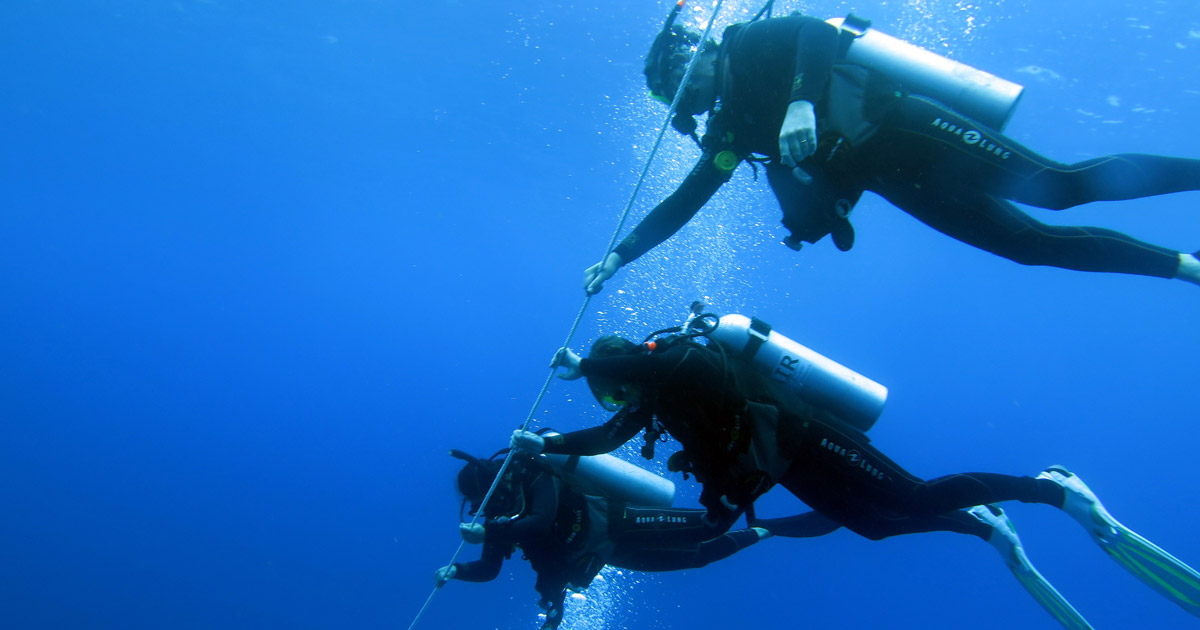
What you need to know about drift diving.

Ways to try keep safe, and minimise risk while drift diving, especially when diving in strong currents.

Staff here at DAN Asia Pacific was recently contacted by the sister of a diver that went missing during a dive in Komodo on July 14. Komodo is well known as an area prone to strong currents, and this is one factor being considered as a cause for this incident. We’re still trying to determine the facts so that we may learn from this tragedy, but the incident prompted us to look at ways to try keep safe, and minimise risk while drift diving, especially when diving in strong currents. Continue reading “What you need to know about drift diving.”